


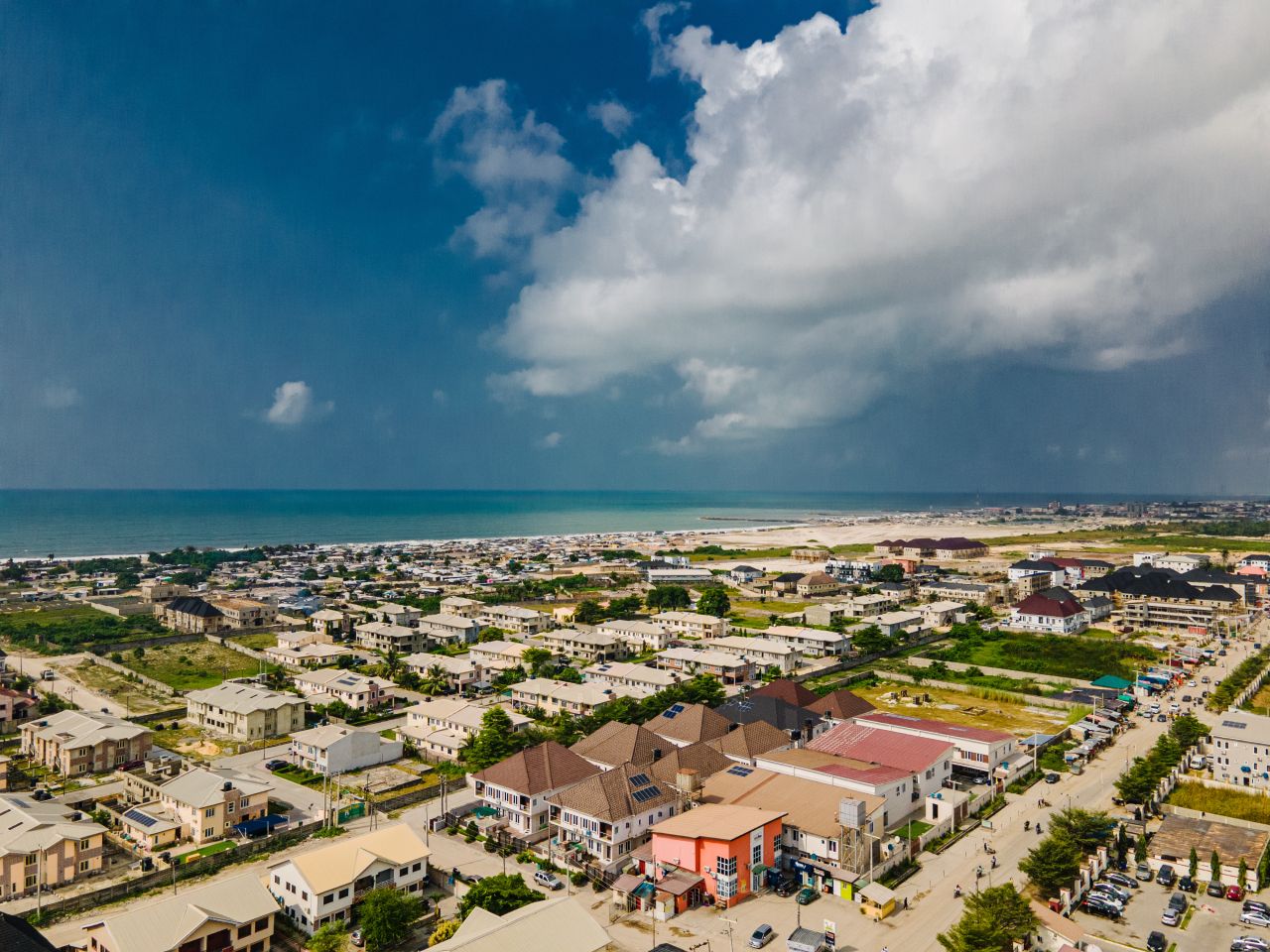
They called Lekki "too far." They said Ajah was "undeveloped." Now history is repeating itself in Eleko.
There is a particular kind of regret that only real estate investors know. It is not the sharp, immediate pain of a bad decision. It is the slow, grinding recognition of a good decision that was never made — the land you saw, researched, almost bought, and then watched appreciate beyond your reach while someone else collected the returns.
Every successful Lagos property market has produced this regret in equal measure to its winners. The people who dismissed Lekki Phase 1 as "too remote" in 1998. The professionals who said Ajah was "not ready" in 2008. The executives who felt Sangotedo was "too early" in 2013.
They were not uninformed. They were not careless. They simply let hesitation become their decision — and the market moved without them.
In 2026, the location generating that same conversation — the same mix of early excitement among the informed and lingering doubt among the hesitant — is Eleko, Ibeju-Lekki. And everything about the evidence trail points in one direction.
The investors who understand what is happening here are not waiting for more confirmation. They are calling. They are reserving. They are completing transactions while others are still deciding whether to do more research.
If you are ready to understand exactly what is available and at what price, our team will give you the full picture — no pressure, just facts.
The transformation of Ibeju-Lekki: not a promise — a physical reality
For readers outside Nigeria, a clear-eyed explanation of why Ibeju-Lekki — and Eleko within it — has become the most talked-about investment corridor on the West African continent.
Ibeju-Lekki is a coastal local government area stretching east of the established Lekki residential zone along Lagos's Atlantic coastline. For most of its history, it was considered peripheral — too far from the city's commercial core to attract serious residential or commercial investment. That perception has been permanently and irreversibly overturned by a cluster of infrastructure investments of extraordinary scale.
Africa's largest refinery — operational.
The Dangote Petroleum Refinery, with a refining capacity of 650,000 barrels per day, sits within the Ibeju-Lekki corridor. It is not under construction. It is not a projection. It is running, producing refined petroleum products, and employing a workforce of tens of thousands of engineers, technicians, administrators, and support staff — all of whom require housing within reasonable commuting distance.
Nigeria's most modern deepwater port — active.
The Lekki Deep Sea Port is receiving vessels. The economics of West African trade are being rewritten as cargo that previously had to transit through Apapa's chronically congested facilities now moves through a modern, efficient port at the eastern end of the Lekki corridor. Port activity generates residential demand — historically, in every port city on earth, without exception.
A 165-square-kilometre free trade zone — growing.
The Lekki Free Trade Zone hosts manufacturers, processors, and logistics companies from China, India, Europe, and beyond. Its employment base is expanding as successive phases of the zone reach operational capacity. Those employees need homes. Those businesses need worker accommodation solutions.
A planned international airport.
The proposed new airport designated to serve the eastern Lagos corridor will, when completed, create the full infrastructure ecosystem of a self-contained city within the Ibeju-Lekki zone — dramatically reducing the corridor's dependence on the congested western Lagos transport network.
Eleko sits within this corridor, positioned along the Lekki-Epe Expressway with direct accessibility to every one of these infrastructure anchors. It is not peripheral to this development story. It is embedded within it.
Why international and diaspora investors are acting with urgency
The Eleko investment thesis is not Lagos-specific. It is understood and acted upon by investors across the global Nigerian diaspora and by international real estate investors with exposure to emerging market opportunities.
Here is what they see that many local observers still underestimate:
The currency arbitrage window.
For buyers holding US dollars, British pounds, euros, Australian dollars, or any major hard currency, the current naira pricing of Eleko land represents a structural discount relative to the asset's true value trajectory. You are acquiring a land parcel in a confirmed infrastructure growth corridor at a hard-currency cost that would be impossible in any comparable emerging market context globally. This discount is a function of naira depreciation — and it will compress as Lagos property prices continue their historical pattern of dollar-equivalent appreciation.
The infrastructure confirmation premium.
In early-stage land markets, buyers pay a speculation discount — they accept lower prices because the future value is uncertain. In Eleko in 2026, the infrastructure is no longer speculative. The refinery is running. The port is active. The free trade zone is employing. You are entering a market where the value drivers have been confirmed — which means you are paying less than a mature market price while capturing appreciation that has not yet fully materialised in land values. This is the rarest combination available in any investment asset class: confirmed fundamentals at pre-maturity prices.
Residential undersupply against proven demand.
The workers, managers, and executives employed across the Ibeju-Lekki industrial corridor need housing now. The residential development pipeline has not kept pace with employment growth. This gap between housing supply and employment-driven demand is the single most reliable driver of residential land value appreciation — and it is structural, not cyclical, in Eleko's case.
Legacy asset building for the diaspora generation.
For Nigerian professionals abroad, land in Eleko represents something beyond financial return. It is a generational asset — a foothold in one of Africa's most consequential development zones, held for children who will inherit a fundamentally different Lagos from the one their parents left.
The winning investment characteristics of Eleko land
Measured against every criterion that experienced property investors apply to early-stage land markets, Eleko performs strongly across the board:
Affordability relative to comparable zones.
Land prices in Eleko remain at a significant discount to Ajah, Sangotedo, and certainly Lekki Phase 1 and Ikoyi. You are acquiring within a corridor whose infrastructure profile now rivals or exceeds those more expensive zones — at a price that reflects where awareness was, not where it is heading.
Multiple monetisation pathways.
Unlike a stock or a bond, land in Eleko gives you genuine strategic flexibility: • Hold and sell as the corridor matures and prices escalate • Develop residential accommodation targeting the workforce population and generate consistent rental income • Subdivide larger parcels and sell to individual residential buyers at a premium to your acquisition cost • Lease commercial frontage plots to logistics and retail operators serving the growing corridor population • Retain as a legacy asset for family inheritance and intergenerational wealth transfer
No depreciation risk.
Land does not deteriorate. It does not become obsolete. It does not require maintenance capital. While it sits and the surrounding infrastructure matures, it appreciates — passively, consistently, and without any active management requirement. For diaspora investors managing assets from abroad, this passivity is a significant practical advantage.
Liquidity in a rising market.
As Eleko land values rise and awareness of the opportunity grows, the buyer pool expands. An asset acquired today at early-stage pricing will, in three to five years, be marketable to a significantly larger pool of buyers at a significantly higher price — providing exit liquidity that early-stage land markets typically lack.
How we protect your investment: documentation that stands up to scrutiny
We understand that for international buyers and diaspora investors, the question of documentation security is not a secondary concern — it is the primary concern. The Lagos land market's history of fraud is real, and it demands a real response.
Our response is systematic and non-negotiable:
Every plot is excision-verified.
Excision is the formal legal process by which the Lagos State Government releases specific parcels of land from government acquisition, making them legally available for private purchase. We do not present any land that has not been confirmed as excised or covered by a gazette entry. This is the foundational document that separates legitimate private land from illegally sold government land.
Every plot has a registered survey plan.
Filed with the Lagos State Surveyor-General's Office, the Survey Plan identifies the exact coordinates, beacons, boundaries, and dimensions of the specific parcel. We verify this independently — not by accepting the seller's copy, but by conducting our own confirmation with the Surveyor-General's Office directly.
Every title undergoes a land registry search.
A physical search at the Lagos State Land Registry confirms the identity of the registered owner, confirms the absence of encumbrances, mortgages, court orders, or competing claims, and confirms that the land is legally transferable. We provide buyers with the search results.
Every transaction is legally documented.
A qualified Nigerian real estate lawyer prepares the Deed of Assignment, oversees its execution, coordinates stamping at the Federal Inland Revenue Service, and manages registration at the Lagos State Land Registry. Governor's Consent is obtained as part of the title perfection process.
You receive documentation that clearly and legally establishes your ownership. You receive it in your name. You receive it through a process that has been professionally overseen at every stage.
Two stories that define the difference between wealth and regret
Adaeze — the accountant in Atlanta who trusted the numbers.
In late 2021, Adaeze, a financial professional based in Atlanta, was introduced to Eleko land by her cousin in Lagos. Her instinct as an accountant was to run the numbers. She looked at the infrastructure map, calculated the employment density being created by the refinery and port, compared the entry price to equivalent corridor land in similar African cities, and reached a clear conclusion: the numbers worked. She bought two plots. She held them. In 2025, she received an unsolicited offer from a residential developer at a price that represented a 380% return on her acquisition cost. She declined — and is now holding for an even higher exit in the next development cycle. Her Lagos real estate position is now the best-performing asset in her entire portfolio.
Tunde — the engineer in London who needed one more year of certainty.
Tunde had been watching Eleko since 2020. He knew the infrastructure story. He had visited the site. He had received documentation from a trusted agent. He was, by every measure, an informed and serious potential buyer. But he kept arriving at the same conclusion: he would wait one more year, until things were clearer. In 2022, prices rose. In 2023, they rose again. In 2024, the specific corridor he had been targeting was acquired by an institutional developer building a workers' estate. The land is no longer available to individual buyers. Tunde is now starting the research process again in a different part of Eleko — at entry prices that in 2020 would have seemed impossibly high.
The difference between Adaeze and Tunde was not information. It was the willingness to act on information when it was available.
Current pricing and payment: what to expect
Eleko land is available across a range of plot sizes and price points, with pricing reflecting specific location within the corridor, proximity to expressway access routes, and plot dimensions. Entry prices remain significantly below comparable corridor land in Ajah and Sangotedo — representing the early-stage discount that is the foundation of the investment case.
Flexible payment structures are available. Buyers can secure a plot with an initial deposit and complete payment over an agreed schedule — making the investment accessible without requiring immediate full capital commitment. This flexibility is particularly valuable for diaspora buyers managing international financial commitments alongside their investment goals.
These prices will not hold through the next development cycle. As residential estate development accelerates in the corridor and the worker housing gap becomes more acute, land acquisition demand will intensify. Prices will follow. The buyers completing transactions today are locking in a price point that will, in retrospect, look like the obvious decision.
Limited plots. Rising demand. One decision.
The available land in quality Eleko corridors is finite. Each transaction reduces what remains. Each week of infrastructure maturation expands the buyer pool. The combination of shrinking supply and growing demand has one outcome — and it has already been playing out consistently for the past four years.
The buyers completing transactions this month are not doing so because they have more information than you. They are doing so because they made a decision about what to do with the information they had.
You now have the information.
About Habita Nigeria
Habita Nigeria is the Lagos representative of the internationally affiliated Habita real estate agency — operating across multiple countries with a consistent commitment to professional standards, transparent documentation, and client-first representation.
We are not a social media land page. We are not an informal agent network. We are a professionally structured real estate advisory operation with verified access to documented land in Eleko, full legal transaction support, and a track record of completed acquisitions by buyers from Nigeria, the UK, the United States, Canada, Europe, and beyond.
When you work with us, you are working with professionals who know this market, know this corridor, and know how to protect your investment from reservation to registered title.
Visit habita.com/ng to explore our full portfolio of verified listings. And when you are ready to talk about Eleko specifically — call or WhatsApp +234 708 095 9253 today.
Habita Nigeria | Verified Land & Property Advisory | Lagos, Nigeria habita.com/ng | +234 708 095 9253